
The Route’s Shared Risk
The ClimbThis flow traces how expeditions cooperate on a common mountain while their separate objectives and assumptions create shared hazards.
increasing Bearing strength in each event
 decreasing
Bearing strength in each eventdecreasingShared Infrastructure
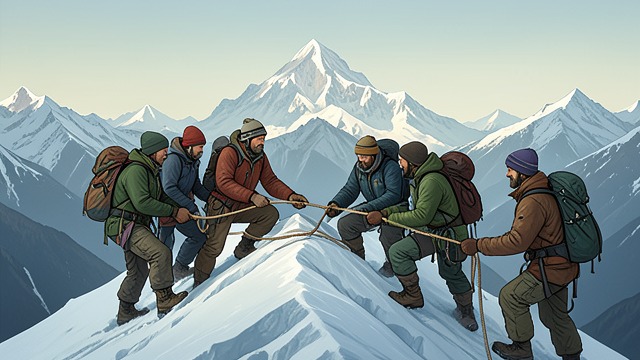
Shared Infrastructure
Common Route
Multiple expeditions rely on the same Icefall route and fixed ropes, even while competing for clients and summit opportunities.
Unequal Contributions
The work and payments involved in route preparation create tensions among organizers, Sherpas, and teams.
Cooperation on Rope Work
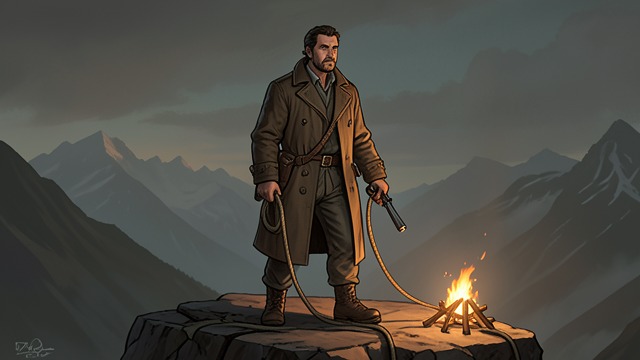
Cooperation on Rope Work
Shared Labor
Several expedition leaders arrange to coordinate the difficult rope fixing between higher camps.
Scheduling Cost
Mountain Madness sends Anatoli Boukreev in place of exhausted Sherpas, sacrificing a rest day before the summit attempt.
Teams Converge
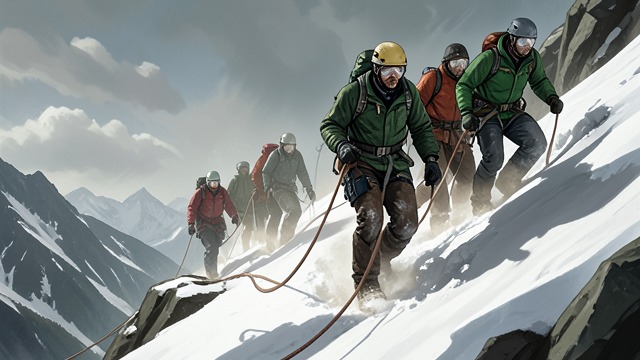
Teams Converge
Mixed Expeditions
Clients from Adventure Consultants, Mountain Madness, and the Taiwanese team share the route.
Collective Bottleneck
A slow climber or missing rope affects everyone behind, showing that separate expeditions cannot fully control their own pace.
Rescue Beyond Allegiance
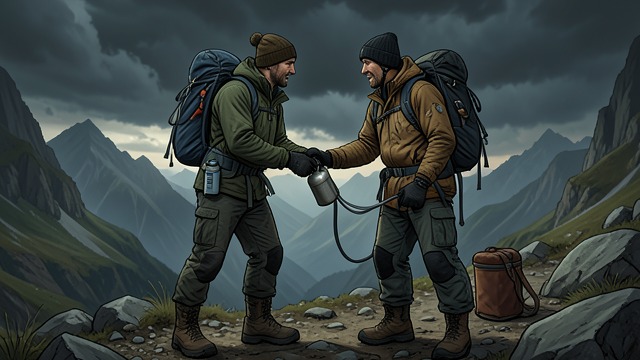
Rescue Beyond Allegiance
Cross-Team Aid
Some climbers and expeditions provide oxygen, medical help, and evacuation support beyond their own clients.
Limits of Solidarity
Other exhausted or sheltered teams cannot respond to requests, revealing the fragile boundary between shared risk and individual obligation.
Shared Mountain, Unequal Outcome
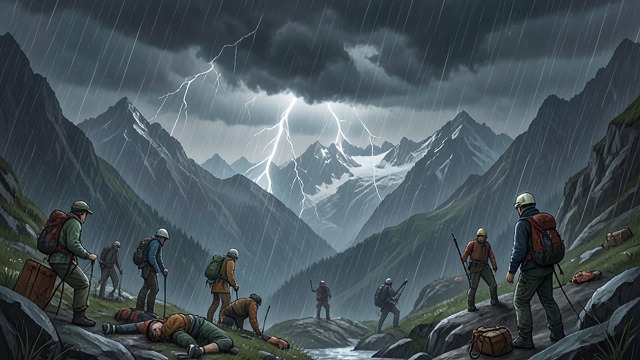
Shared Mountain, Unequal Outcome
Connected Consequences
The storm strikes climbers across several expeditions, but losses and injuries fall unevenly.
Interdependence
The events show that a commercial team’s decisions can affect competitors, Sherpas, and rescuers who never agreed to share its risks.
March 1996
April 26, 1996
early morning of May 10, 1996
May 10–11, 1996
after the disaster
